Stable Entries That Support Weight and Prevent Slipping
Concrete Steps & Ramps in Arvada for cracked, uneven, or unsafe entry points that shift under foot traffic and fail accessibility standards
Concrete Connect builds and repairs concrete steps and ramps for homeowners in Arvada who need safe, level access to front doors, back decks, or garage entries. You may notice that your existing steps have separated from the foundation, tilted to one side, or developed cracks that allow water to seep underneath and worsen the damage each winter. Uneven steps create trip hazards, and surfaces without proper texture become dangerously slick when wet or iced over.
New step installation involves forming risers and treads to code-compliant dimensions, typically with a maximum riser height of seven and three-quarter inches and a minimum tread depth of ten inches. Ramps are sloped at a ratio that meets ADA guidelines, usually one inch of rise per twelve inches of run, and include handrail anchors if required. In Arvada, where snow and ice are common from late fall through early spring, slip-resistant finishes such as broom texture or stamped patterns are necessary to maintain traction.
Concrete Connect can assess your entry points and recommend step or ramp configurations that meet your accessibility and safety needs in Arvada.
How Steps and Ramps Are Formed and What You Gain
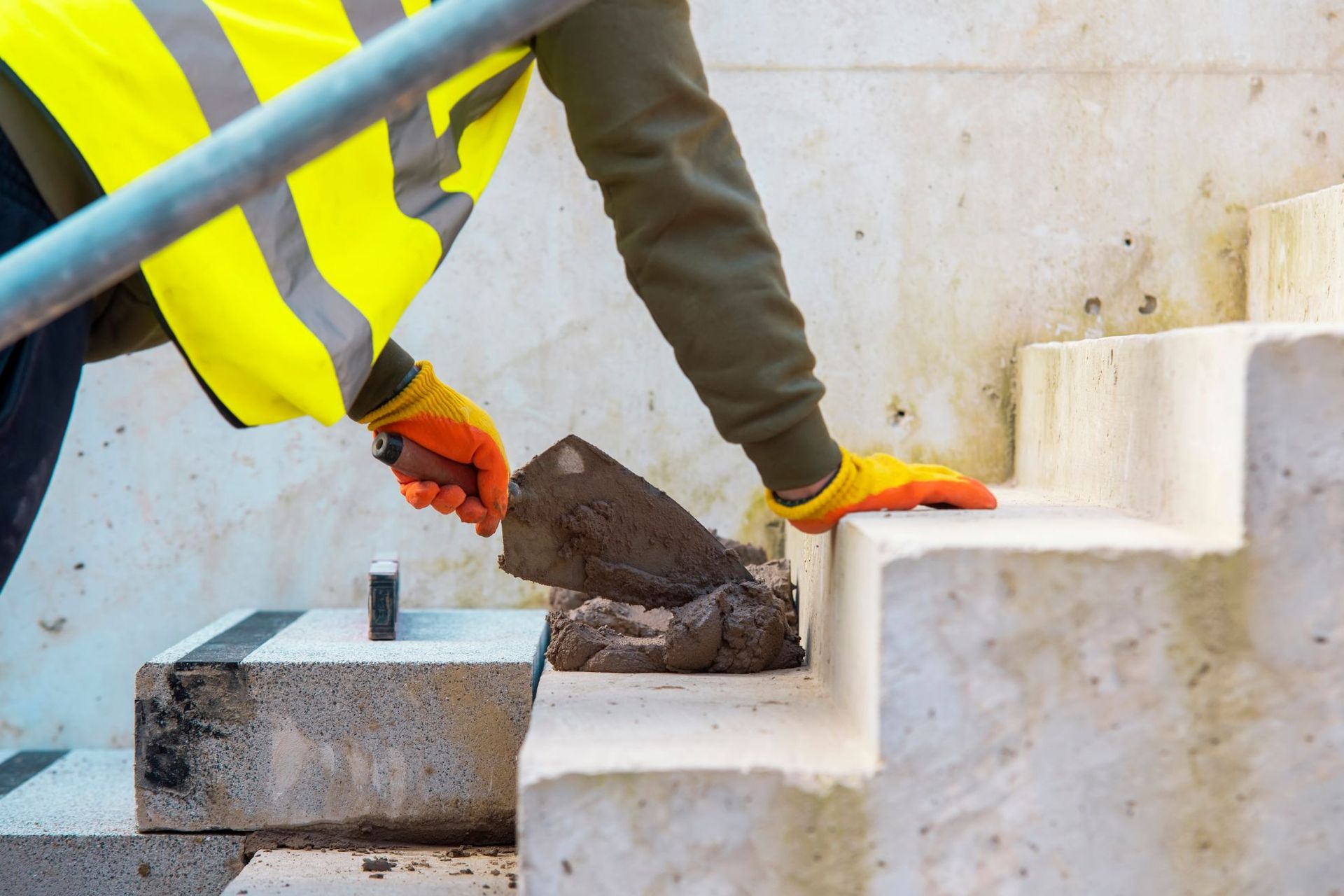
You will see the crew excavate and compact the base where the steps or ramp will sit, then build wooden forms that define each riser and tread or the slope of the ramp surface. Rebar is placed inside the forms to reinforce the structure, especially where the steps attach to a porch or foundation. Concrete is poured, leveled, and finished with a broom or stamped texture that provides grip underfoot.
After curing, you will step onto a solid, level surface with consistent riser heights and no rocking or movement when weight is applied. Concrete Connect ensures that each tread drains properly to prevent ice buildup, and the crew can add decorative stamping or coloring to match existing hardscape. Handrail sleeves or anchors are cast into the concrete if railings will be installed later.
Repairs focus on stabilizing or replacing individual treads or sections that have cracked or separated. The crew removes damaged portions, re-forms the area, and pours new concrete that bonds to the existing structure. Sealing is optional but helps protect against moisture and salt damage over time.
Questions About Step and Ramp Construction
Homeowners often ask about code requirements, timing, and how to prevent future cracking or settling.
What is the standard riser height for concrete steps?
Building codes in Arvada typically require risers no taller than seven and three-quarter inches and treads at least ten inches deep. Consistency across all risers is critical for safety.
How long does it take to pour new steps?
Most residential step installations are completed in one to two days, including forming, pouring, and finishing. Curing takes about a week before the steps can bear full weight.
Why do steps crack and pull away from the house?
Settling, freeze-thaw cycles, and lack of reinforcement cause most step failures. Proper base compaction and rebar placement reduce these risks but do not eliminate them entirely.
What makes a ramp ADA-compliant?
The slope must not exceed one inch of rise per twelve inches of run, and the surface must be slip-resistant and free of abrupt changes in level. Concrete Connect can design and pour ramps that meet these standards in Arvada.
How do I prevent ice buildup on steps in winter?
A broom or stamped finish provides better traction than a smooth surface, and proper drainage keeps water from pooling and freezing. Sealing also reduces moisture absorption that can lead to surface spalling.
Concrete Connect works with homeowners to design step and ramp layouts that fit the entry configuration and meet local building standards in Arvada.